01 · Consumer product · Fashion · Technology
Reframd
Inclusive eyewear, 3D printed to fit every face
Role
Co-founder · Operations, sales & marketing
Years
2019 – now
Field
Consumer product · Fashion · Technology
Tools
Kickstarter · Shopify · 3D printing · iPhone face scan (ARKit)
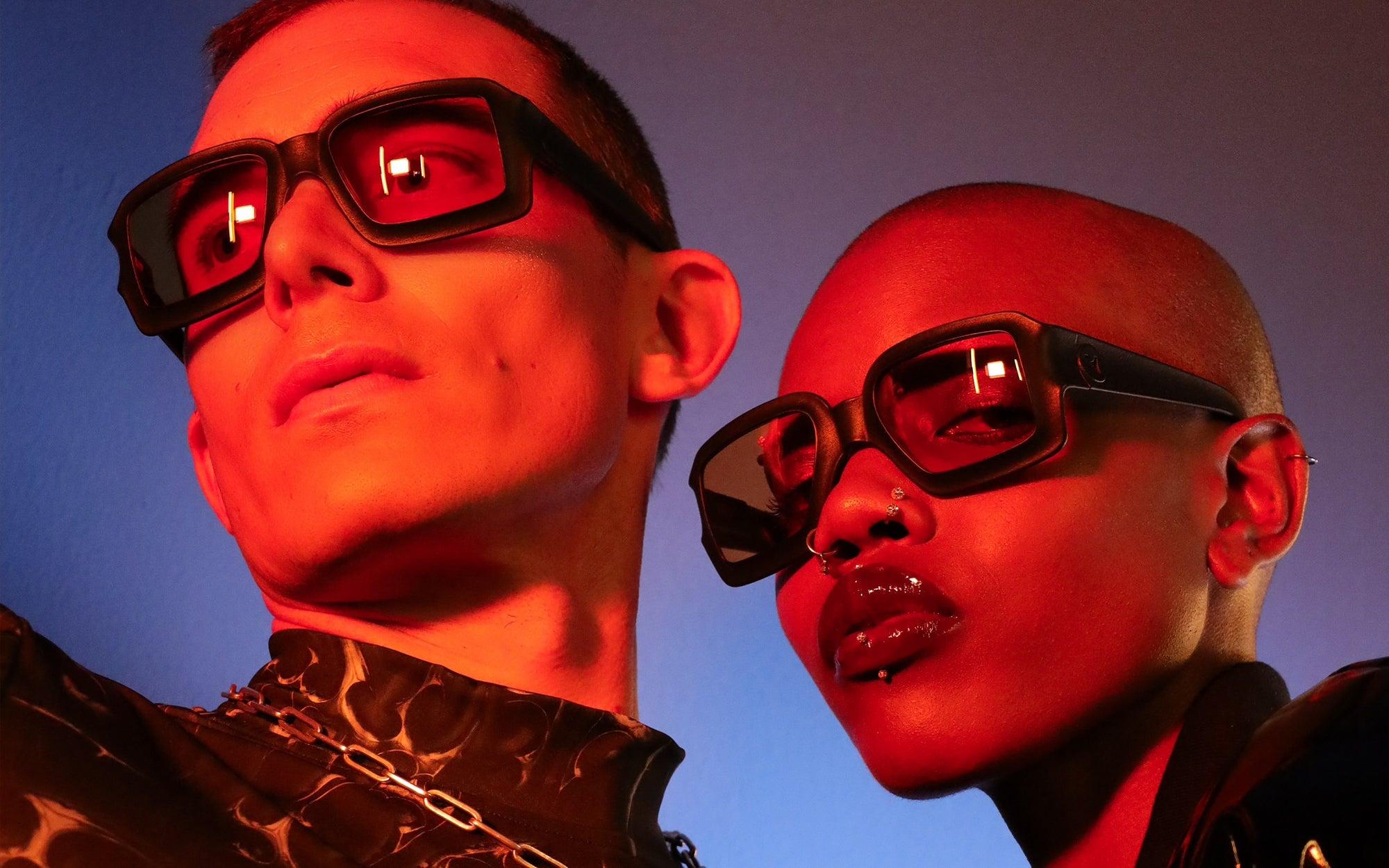
Reframd is an inclusive eyewear brand. Most glasses are designed around one nose shape: narrow and high. If your bridge is low or wide, frames slide down or sit on your cheeks. Together with co-founder Ackeem Ngwenya and a small team of partners, we built Reframd to fix that: frames 3D printed to order, matched to your face with a scan.
119%
Kickstarter goal reached: €42,944 from 282 backers
45
fit combinations per design
0
frames in stock: every pair printed to order
€0
paid media behind the launch press
The problem
We both knew the problem from our own faces. Glasses never sat right, and the industry treated that as the wearer's problem.
It is not a niche. Black, East Asian and Southeast Asian wearers, and many others, have low or wide nose bridges that standard sizing ignores. They buy frames that were never drawn for them.
How it started
I met Ackeem in the summer of 2019 at a food festival in Berlin. He was showing 3D printed glasses for low and wide noses. He is a product designer trained at the Royal College of Art. I had the business side: sales, operations and getting a product to market.
We split the work cleanly. Ackeem owned design and product. I owned operations, sales and marketing, and ran the business from Amsterdam.
The approach
We changed three things about the frame: a lower, wider bridge, nose pads shaped for shallow noses, and less tilt so the frame clears the cheekbones.
Then we removed the reason the industry ignores these faces: stock. Every pair is 3D printed to order in light nylon, so offering many fits costs us nothing extra. No tooling, no minimum orders, nothing waiting in a warehouse to be discounted.
We chose partners over factories. Materialise printed the frames, Zeiss made the lenses and Redtenbacher made the hinges. Reframd was never a one-person job: a small team and these partners shipped a premium product from day one.
The launch
We launched on Kickstarter in June 2021 with a goal of €36,000. Halfway through, our first message was not landing with Kickstarter's audience, so we rewrote it mid-campaign around the benefit: eyewear made for your face. The campaign closed at €42,944 from 282 backers, and Kickstarter made it a Project We Love.
Around the launch Reframd was covered by Dezeen, Harper's Bazaar UK, ELLE Brasil, Core77 and Design Week, without a euro of paid media. The story did the work: a real problem, a clear fix, and two founders who had lived it.
Technology as the product
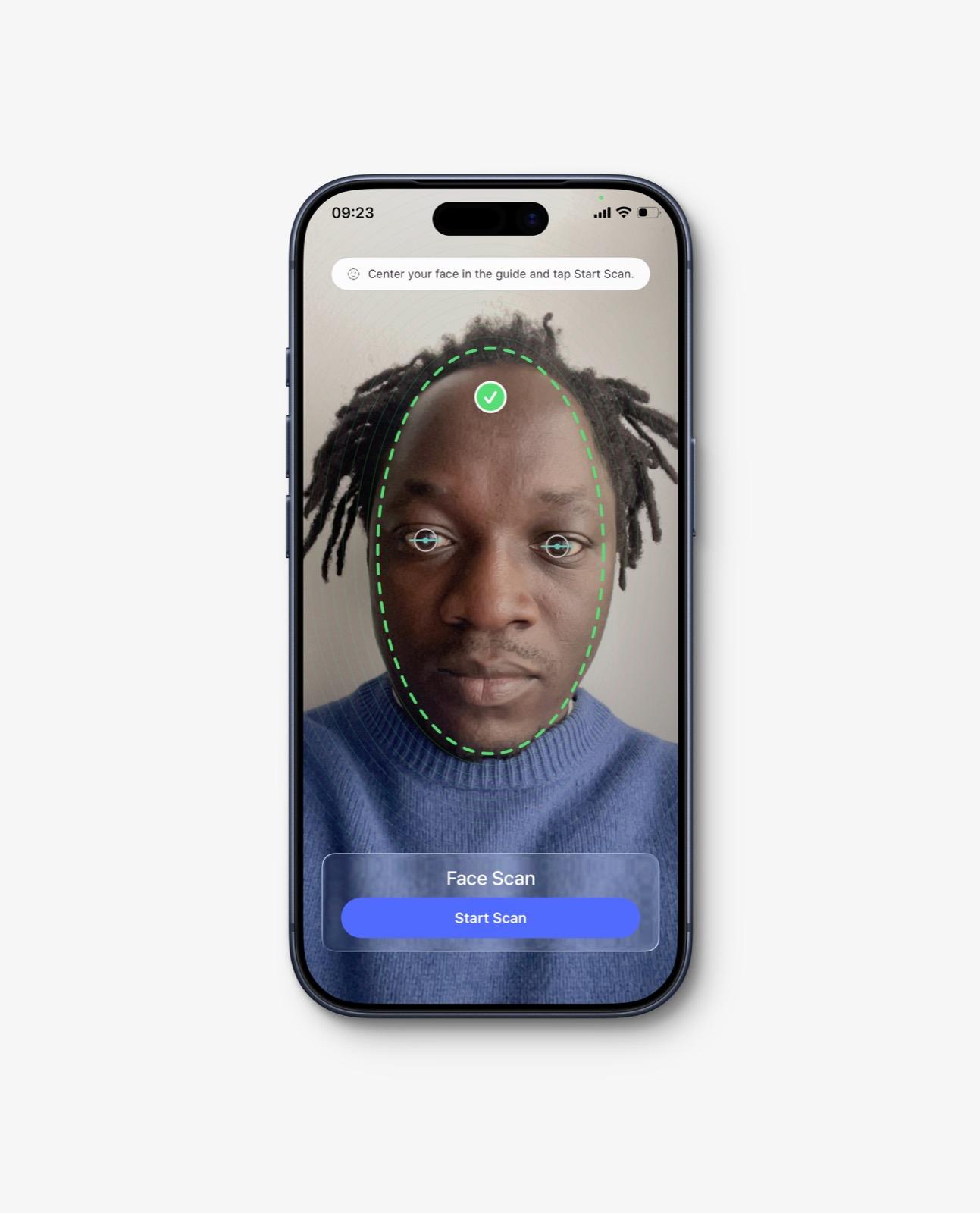
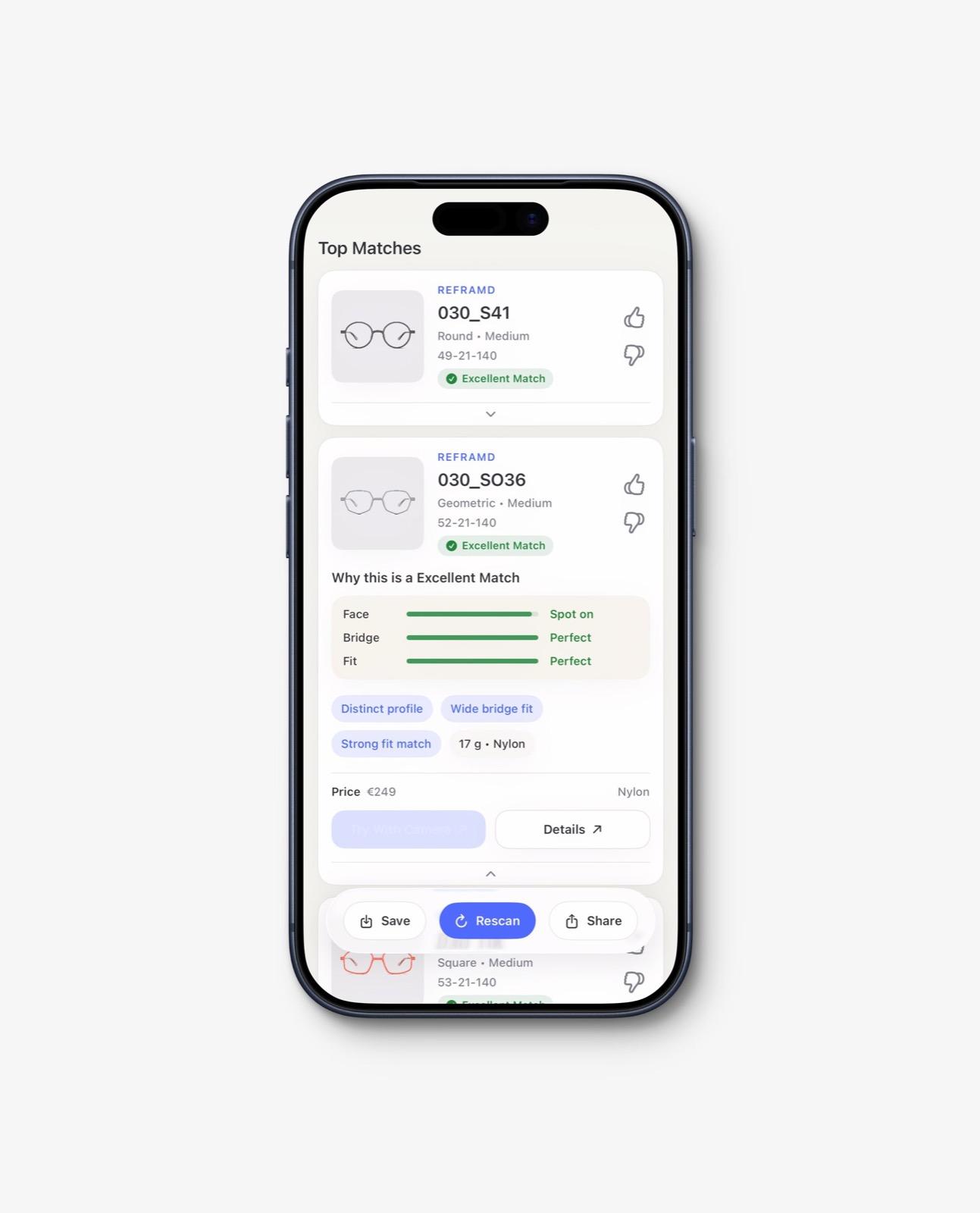
Fit is the whole promise, so we made it measurable. The Reframd Fit app scans your face in three seconds with the iPhone camera, measures bridge width and height, face width, pupil distance and temple length, and ranks every frame by how well it fits you. The scan stays on the phone.
Today every design comes in nine fits (three bridges, three sizes) and five temple lengths: 45 combinations. A cloud tool, Reframd Studio, lets opticians create frame variants for their own customers.
Backing and recognition
We funded Reframd with angel investors, EU grants and Google. We won the European Commission's WORTH Partnership Project and joined Google for Startups' Black Founders Fund in 2022.
What I took from it
A clear problem is the best marketing you can have. Once we said it plainly, press, backers and partners understood it in one sentence.
Change the message fast when it doesn't land. Our Kickstarter worked because we rewrote it halfway, not because the first version was right.
Technology should remove a constraint, not decorate a product. 3D printing mattered here because it made many fits affordable, not because it sounded new.
Next project
AI Office →